

Tunnel Design Fundamentals
Introduction
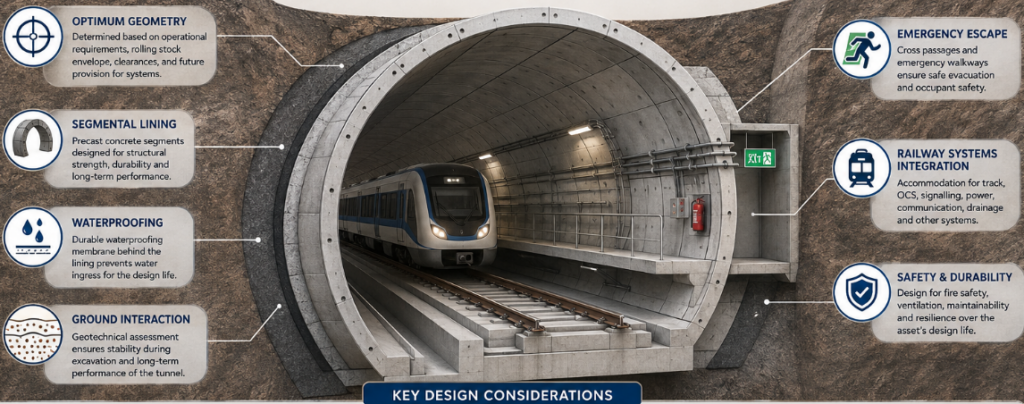
Following the overview of Tunnel Boring Machines (TBMs) in Part 1, this article focuses on the key engineering principles involved in designing bored railway tunnels. Tunnel design extends far beyond selecting the excavation method. Engineers must determine the optimum tunnel geometry, design the segmental lining, ensure long-term waterproofing, provide emergency escape routes, and accommodate railway systems while maintaining safety, durability and maintainability throughout the asset’s design life.
Determining Tunnel Diameter
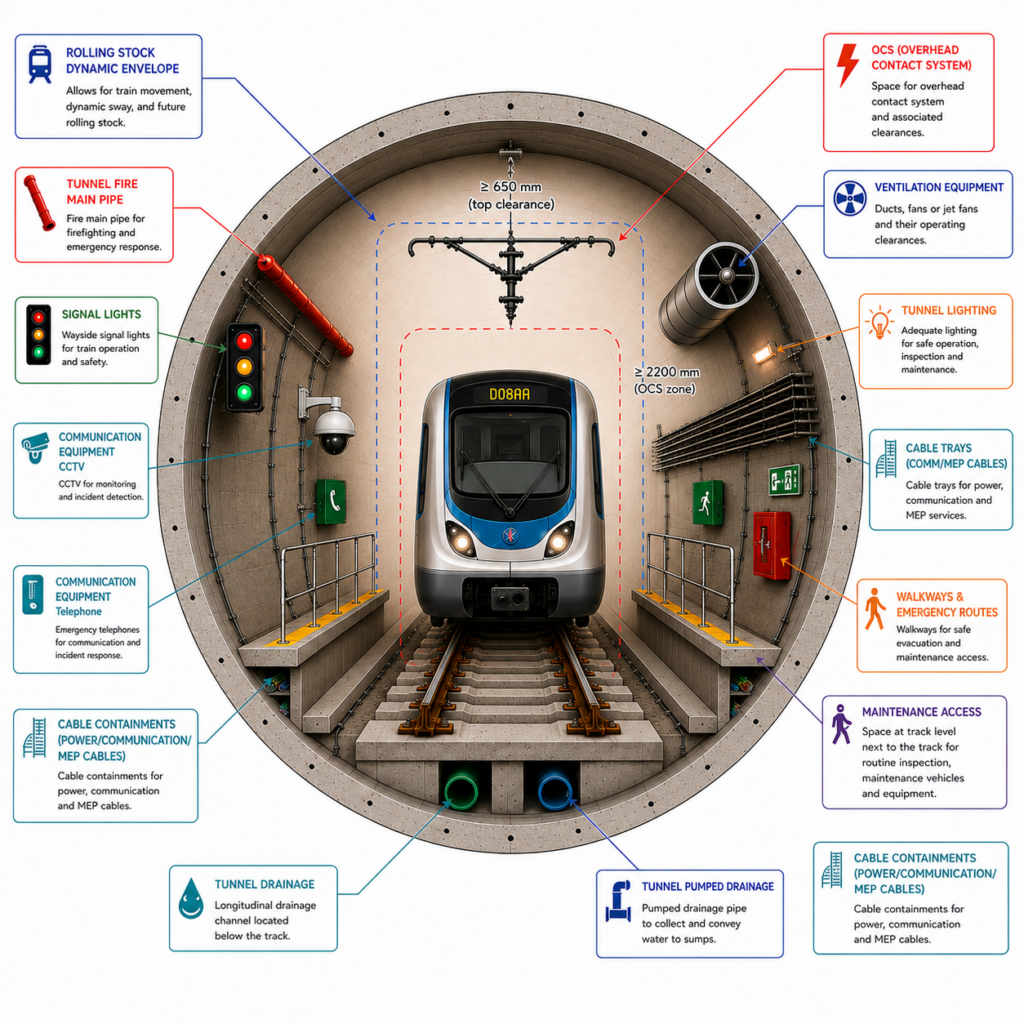
One of the earliest design decisions is selecting the internal tunnel diameter. This is governed by the railway clearance envelope and the space required for infrastructure throughout the operational life of the railway.
The tunnel must accommodate:
- Rolling stock dynamic envelope
- Track structure (Slab track)
- Overhead Contact System (OCS) or third rail
- Walkways and emergency evacuation routes
- Signal equipment
- Cable containment
- Drainage systems
- Ventilation equipment
- Communciation equipment
- Tunnel lighting
- Tunnel pumped drainage
- Tunnel fire main
- Maintenance access
Designers must also consider aerodynamic effects, maintenance requirements and future rolling stock upgrades. Selecting a tunnel diameter that is too small can significantly increase long-term operational constraints.
Tunnel Alignment
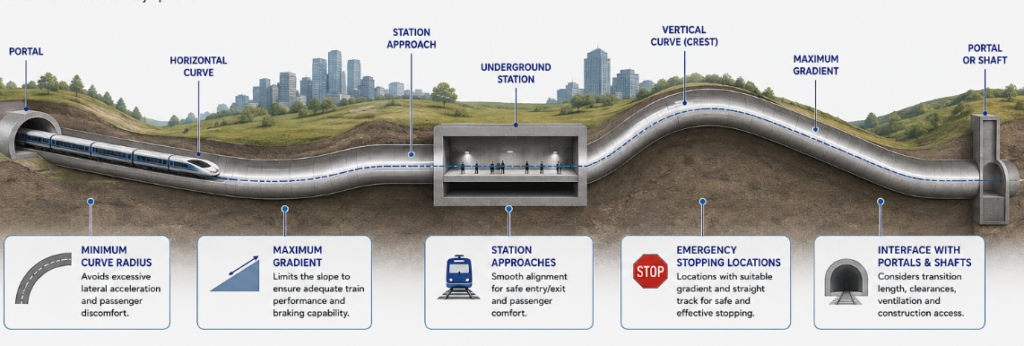
Tunnel alignment directly influences passenger comfort, train performance and construction feasibility.
Key considerations include:
- Horizontal and vertical geometry
- Maximum gradients
- Minimum curve radius
- Station approaches
- Emergency stopping locations
- Interface with portals and shafts
Alignment should minimise excessive curvature while considering geological conditions and existing utilities.
Segmental Tunnel Lining
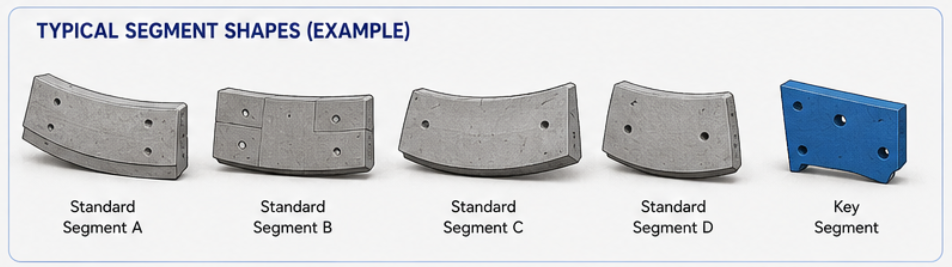
Modern railway tunnels generally use precast reinforced concrete segmental linings erected immediately behind the TBM.
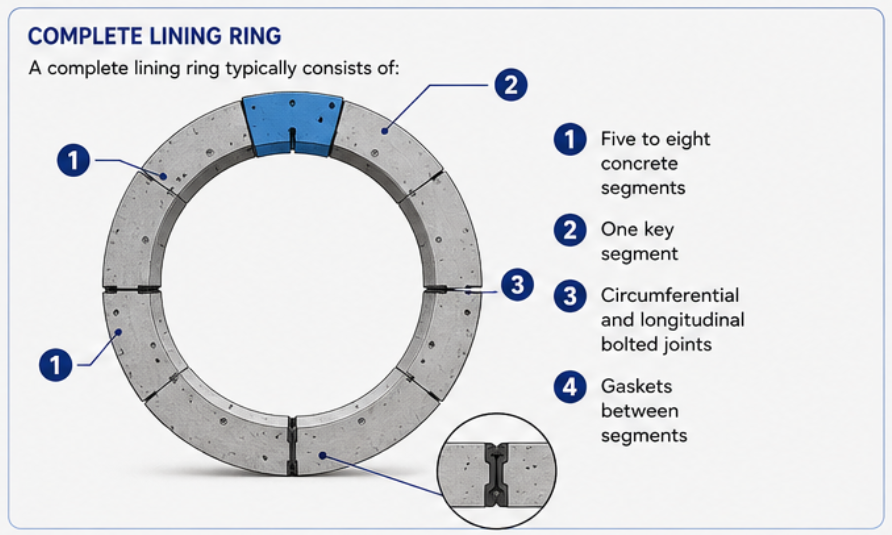
A complete lining ring typically consists of:
- Five to eight concrete segments
- One key segment
- Circumferential and longitudinal bolted joints
- Gaskets between segments
The lining provides:
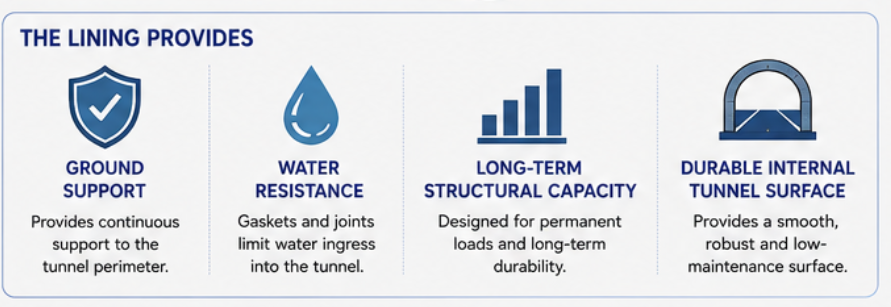
- Ground support
- Water resistance
- Long-term structural capacity
- Durable internal tunnel surface
The lining is designed to resist:

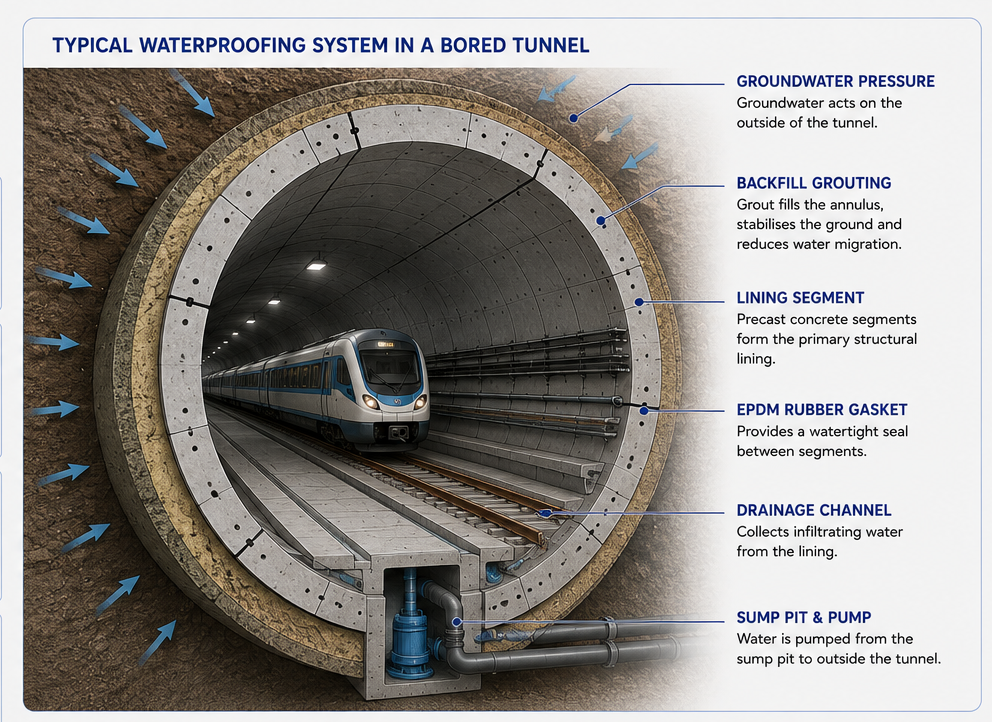
Waterproofing
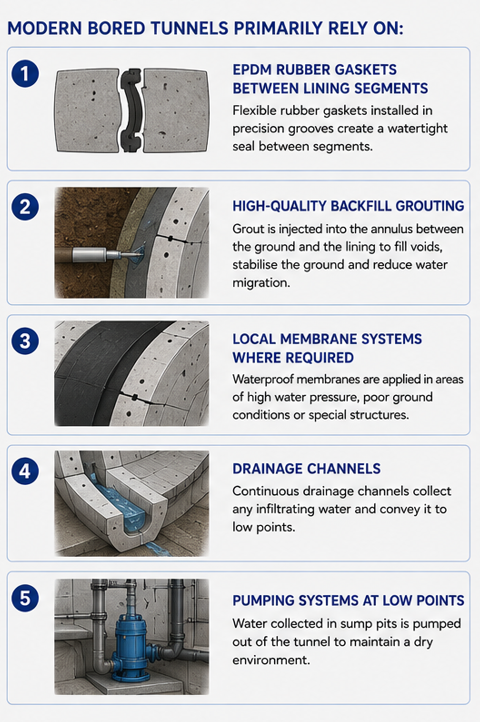
Waterproofing is critical to maintaining tunnel durability and protecting railway systems.Modern bored tunnels primarily rely on:
- EPDM rubber gaskets between lining segments
- High-quality backfill grouting
- Local membrane systems where required
- Drainage channels
- Pumping systems at low points
The objective is to minimise water ingress throughout the tunnel’s design life.
Cross Passages
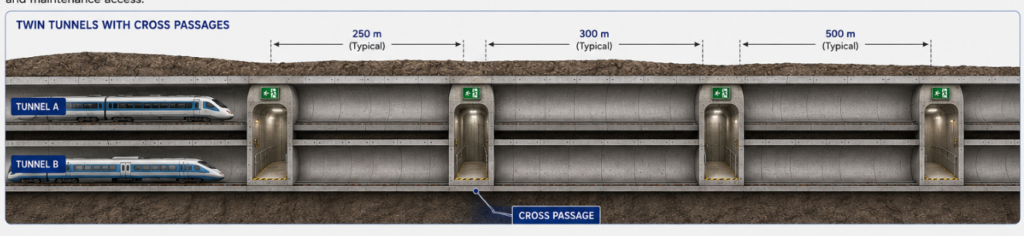
Where twin running tunnels are constructed, cross passages provide emergency evacuation and maintenance access.
Typical spacing varies depending on national regulations but commonly ranges between:
- 250 m
- 300 m
- 500 m
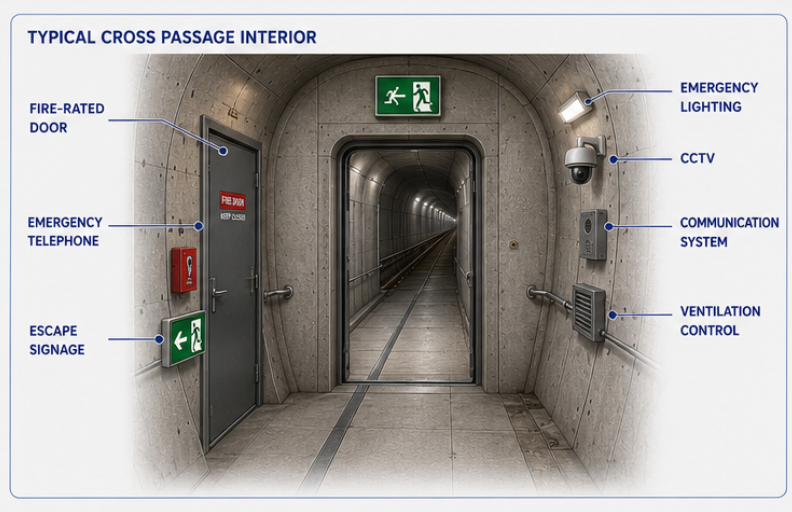
Cross passages usually contain:
- Fire-rated doors
- Emergency lighting
- Communication systems
- CCTV
- Ventilation controls
- Escape signage
Emergency Walkways
Continuous evacuation walkways are normally provided throughout railway tunnels.
They allow:
- Passenger evacuation
- Maintenance access
- Emergency services access
Walkway width depends upon railway standards but typically ranges from 800 mm to 1,200 mm.
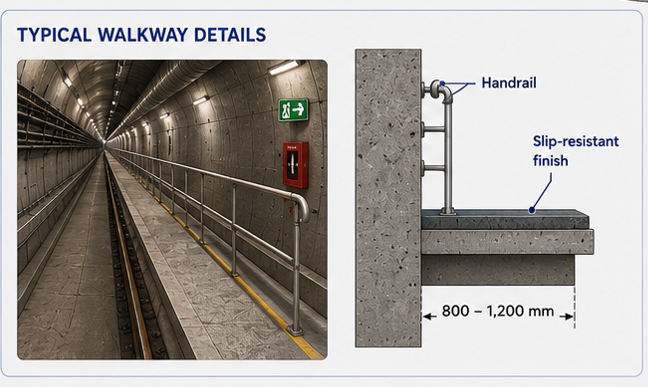
Slip-resistant finishes and suitable handrails are commonly provided.
Railway Systems Integration
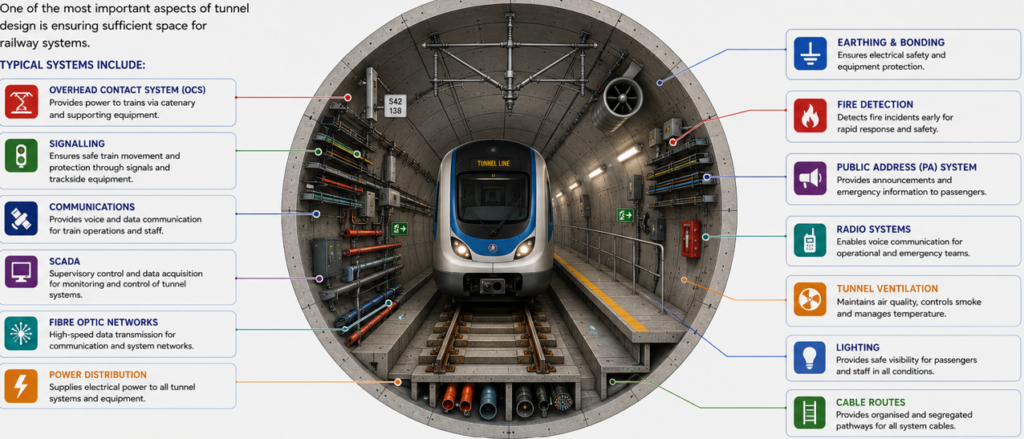
One of the most important aspects of tunnel design is ensuring sufficient space for railway systems.

Typical systems include:
- Overhead Contact System
- Signalling
- Communications
- SCADA
- Fibre optic networks
- Power distribution
- Earthing and bonding
- Fire detection
- Public Address
- Radio systems
- Tunnel ventilation
- Lighting
- Cable routes
Space should be reserved from the earliest design stages to avoid conflicts during detailed design and construction.
Fire and Life Safety
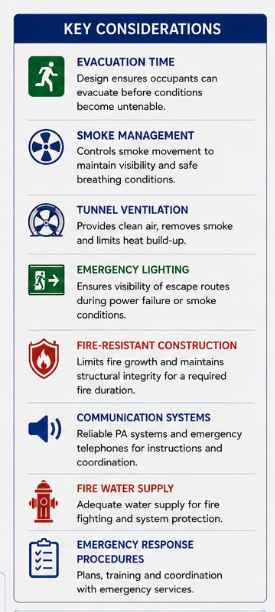
Fire engineering plays a fundamental role in railway tunnel design.
Key considerations include:
- Evacuation time
- Smoke management
- Tunnel ventilation
- Emergency lighting
- Fire-resistant construction
- Communication systems
- Fire water supply
- Emergency response procedures
The overall objective is to ensure passengers can safely evacuate before conditions become untenable.
Drainage
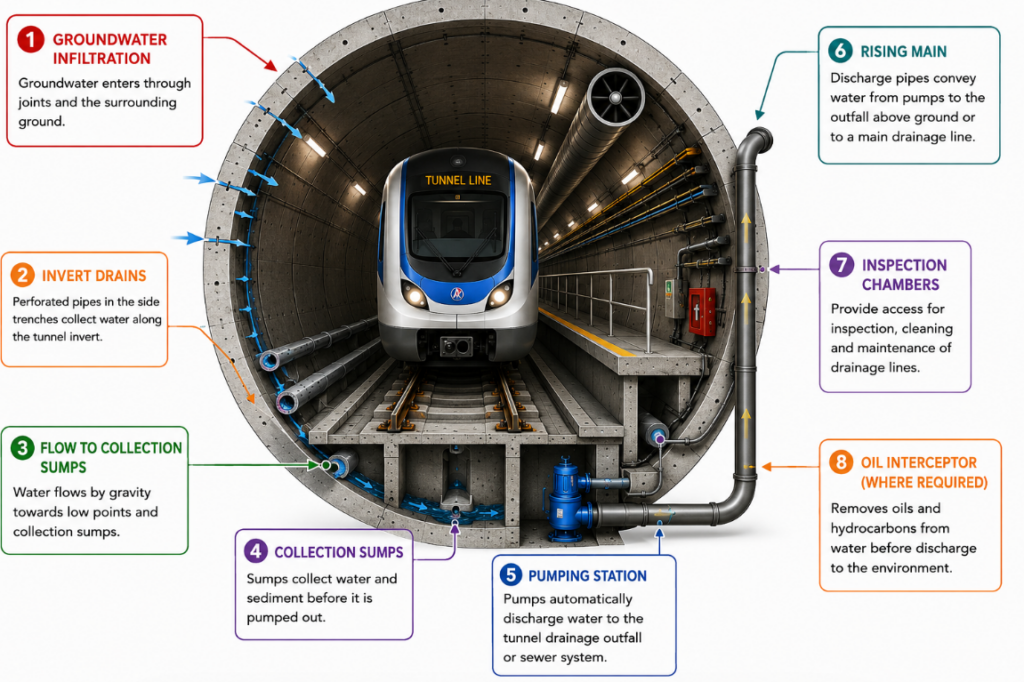
Railway tunnels require permanent drainage systems to manage groundwater infiltration, cleaning water and emergency discharge.
Typical components include:
- Invert drains
- Collection sumps
- Pumping stations
- Inspection chambers
- Oil interceptors where required
Proper drainage significantly improves long-term durability.
Inspection and Maintenance
Modern tunnel design increasingly considers whole-life asset management.
Design features may include:
- Inspection recesses
- Equipment access points
- Cable access chambers
- Maintenance walkways
- Embedded monitoring systems
- Structural health monitoring sensors
Early consideration of maintenance reduces future operational costs.
BIM and Digital Engineering
Most major railway tunnel projects now utilise Building Information Modelling (BIM).
Digital models assist with:
- Multidisciplinary coordination
- Clash detection
- Construction sequencing
- Quantity estimation
- Asset management
- Digital twins for operation and maintenance
Conclusion
Designing a bored railway tunnel requires close integration between civil, structural, geotechnical and railway systems disciplines. Decisions made during the concept stage—such as tunnel diameter, alignment, segmental lining configuration and space allocation for railway systems—can significantly influence construction efficiency, operational performance and whole-life costs. A well-coordinated design delivers not only a structurally sound tunnel but also one that is safe, maintainable and capable of supporting reliable railway operations for decades.
Suggested References
- ITA – Guidelines for the Design of Tunnels
- EN 1992 – Eurocode 2: Design of Concrete Structures
- EN 1997 – Eurocode 7: Geotechnical Design
- EN 1991 – Eurocode 1: Actions on Structures
- NFPA 130 – Standard for Fixed Guideway Transit and Passenger Rail Systems
- UIC guidance on railway tunnel safety
- Project design manuals from major metro and high-speed rail programmes
Read the relted articles
TBM Bored Railway Tunnels – Part 1 | Technical Articles | RailBays