
What is Dynamic Braking?
Dynamic braking is a method of slowing a railway vehicle by using its traction motors to generate braking force rather than relying solely on mechanical friction brakes.
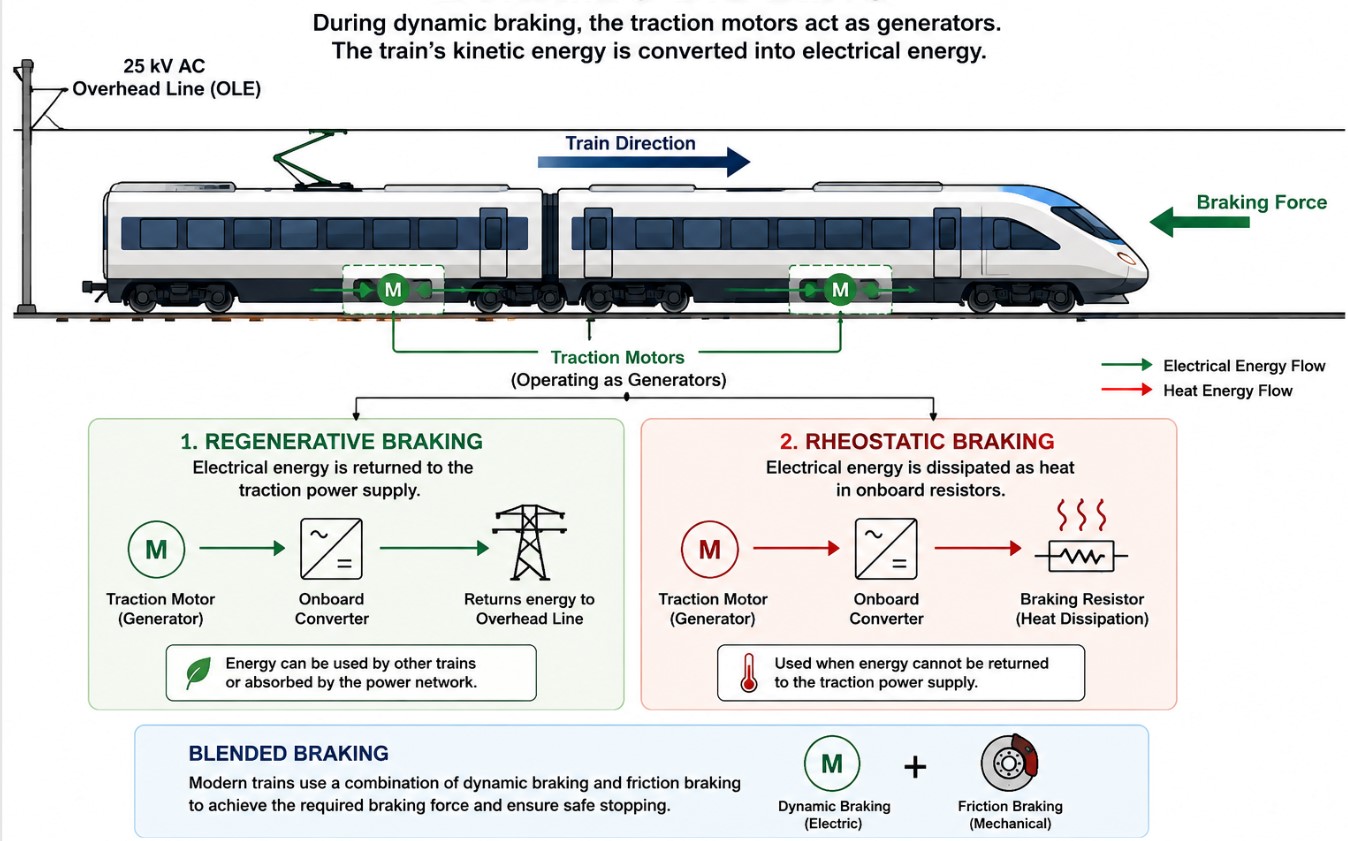
During traction, electrical energy is supplied to the traction motors to produce torque and drive the wheels. During dynamic braking, the process is reversed. The rotating wheels drive the traction motors, which operate as generators. This produces electromagnetic braking torque while converting the train’s kinetic energy into electrical energy.
There are two principal forms of dynamic braking:
Regenerative braking – The electrical energy generated during braking is returned to the traction power supply. Where the traction power network is receptive, this energy may be used by other trains or absorbed by the electrical network.
Rheostatic braking – The generated electrical energy is directed to onboard braking resistors and dissipated as heat when it cannot be returned to the traction power network.
Modern railway vehicles commonly use blended braking, in which dynamic braking and mechanical friction braking are coordinated by the train’s braking control system. Dynamic braking can provide a significant proportion of the required braking effort, while friction brakes supplement the braking force, particularly at low speeds and during the final stage of stopping.
Dynamic braking can reduce wear on brake discs, pads and other mechanical braking components. When regenerative braking is used, it can also improve railway energy efficiency by recovering part of the train’s kinetic energy.
The performance of dynamic braking depends on several factors, including train speed, traction motor characteristics, wheel–rail adhesion, traction converter capability and, for regenerative braking, the ability of the traction power system to accept the regenerated electrical energy.
Dynamic braking therefore represents an important interface between rolling stock, traction power and train control systems in modern electric railways.