
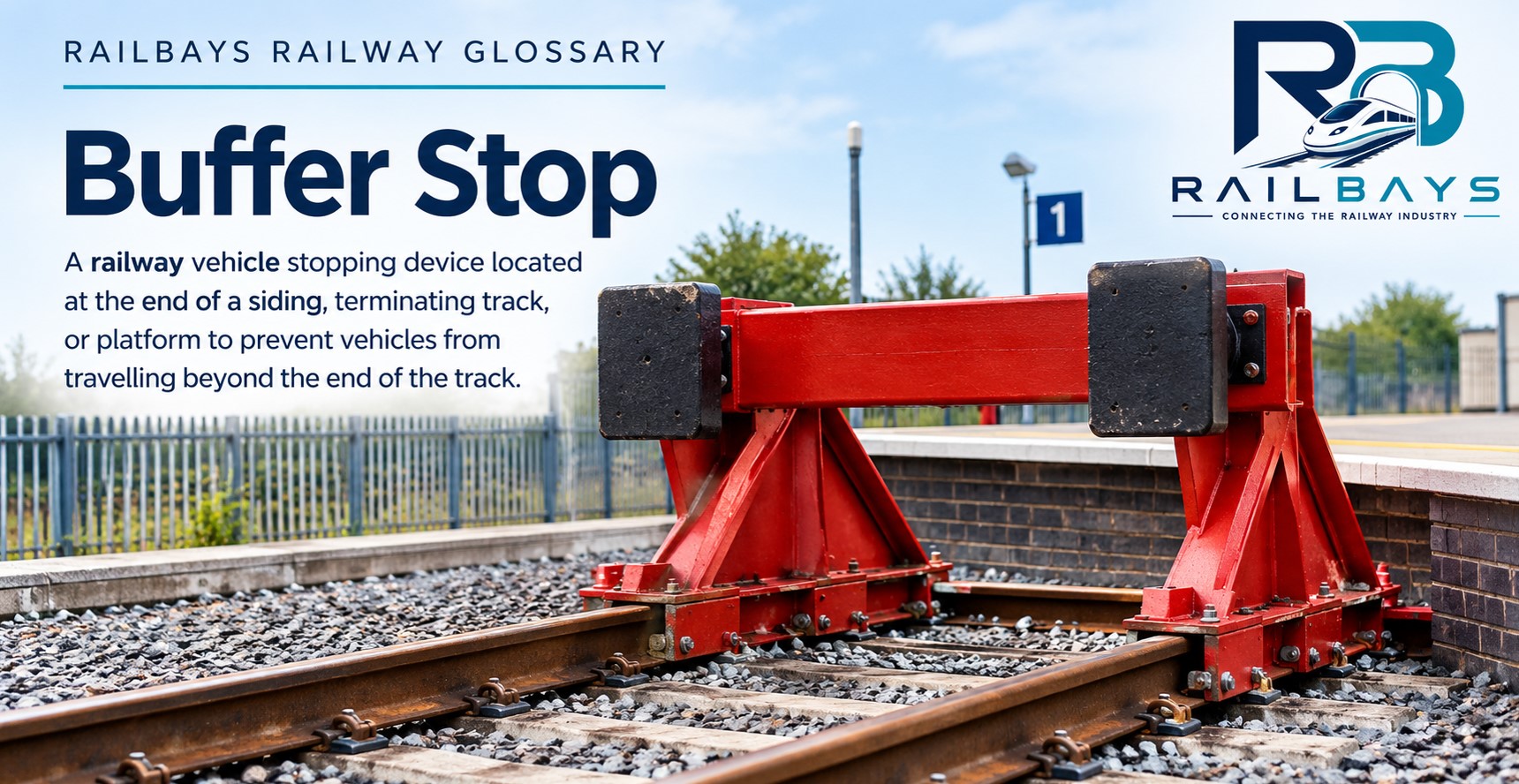
What is Buffer Stop?
A buffer stop is a railway safety device installed at the physical end of a track to stop or restrain a train or other rail vehicle that travels beyond its intended stopping position.
Buffer stops are commonly provided at terminating platforms, sidings, depots, stabling tracks and other dead-end tracks.
Different designs may be used depending on the railway application and the required stopping performance. These include fixed buffer stops, friction or sliding buffer stops, and energy-absorbing systems. Where higher approach speeds or greater stopping energies must be accommodated, the stopping arrangement may incorporate hydraulic or other energy-absorption systems.
The design of a buffer stop should consider factors such as vehicle mass, credible impact speed, available stopping distance, track arrangement and the consequences of an overrun. For passenger terminal tracks, the interface between the buffer stop, platform, structures and areas beyond the end of the track can be particularly important.