A private consortium has submitted plans for a new light rail network serving Montevideo and neighbouring Canelones, proposing an initial US$780 million investment that could eventually form part of a five-line metropolitan network.
The proposal has been submitted to the office of Uruguay’s president by the Three S’s consortium, comprising Swiss rolling-stock manufacturer Stadler Rail, Saceem — part of French infrastructure group NGE — and Uruguayan civil engineering contractor Stiler.
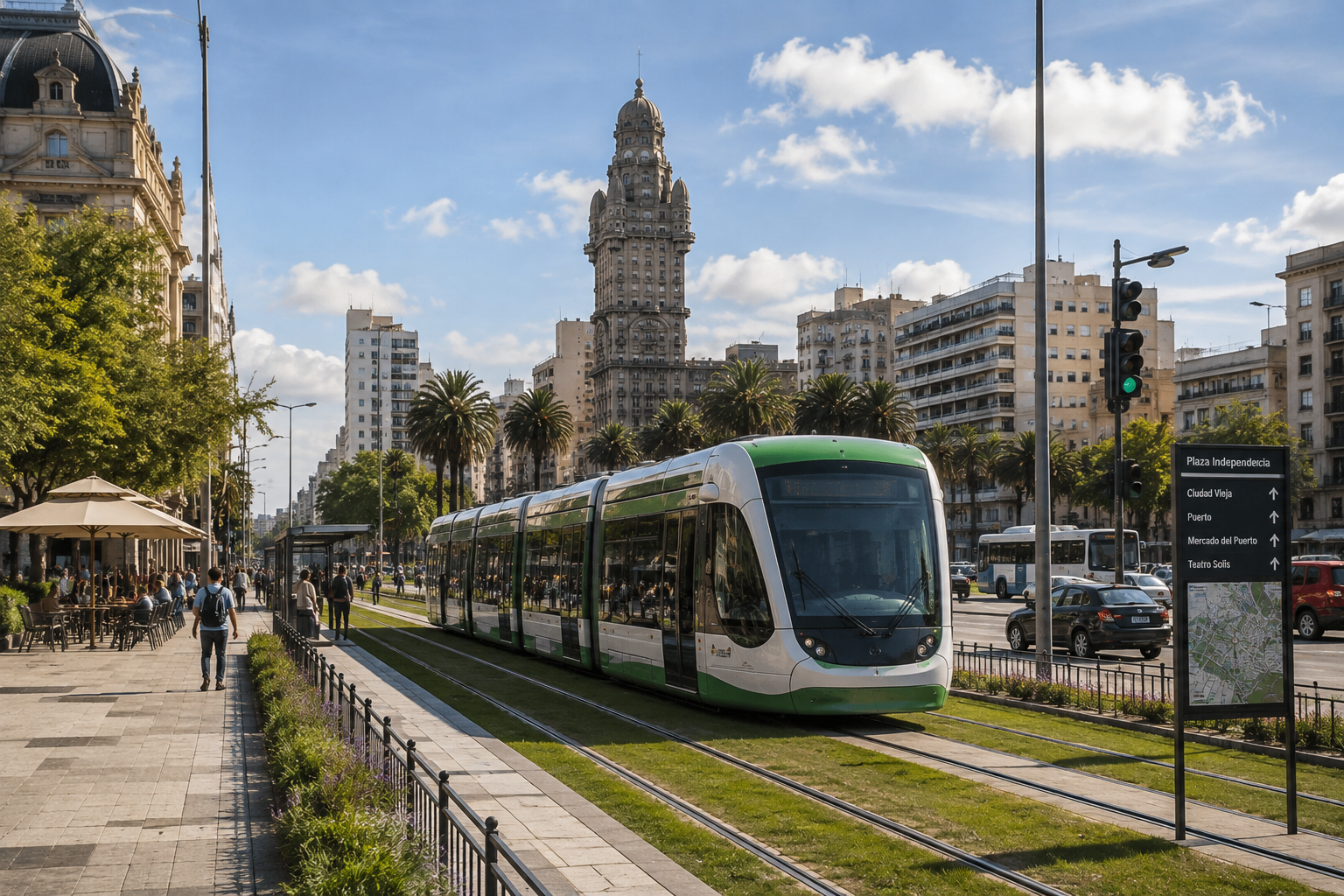
Described by its promoters as a Tram-Train Project, the scheme would introduce modern rail-based public transport along important corridors across the Montevideo metropolitan area.
Despite the tram-train description, the current proposal envisages predominantly new infrastructure rather than simply adapting existing heavy-rail routes.
First Phase Would Deliver Two Lines
The proposed first phase comprises 46.4 km of infrastructure and 48 stops across two routes.
The larger Line 1 would extend approximately 32.6 km from Plaza Independencia in central Montevideo towards El Pinar. The alignment would serve key locations including Tres Cruces, Avenida Italia, Carrasco International Airport and Costa Urbana before continuing east towards the coast.
A second route, Line 2, would extend approximately 13.8 km. Starting from Plaza Independencia, it would run through Tres Cruces before serving Luis Alberto de Herrera, Avenida 8 de Octubre and the Belloni transport interchange, continuing towards Camino Maldonado.
The two routes would share approximately 7.3 km of infrastructure, potentially allowing the network to concentrate services along the busiest central sections.
30 Stadler Citylink Vehicles Proposed
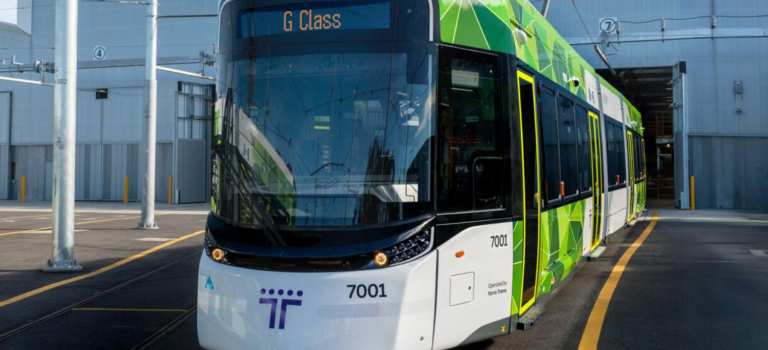
The first phase would include a fleet of 30 Stadler Citylink light rail vehicles.
Citylink is Stadler’s modular tram-train platform and has been supplied for networks in several European countries. Its configuration can be adapted to different operating environments and infrastructure requirements.
Under the Montevideo proposal, the rolling stock would form part of a wider package covering construction, operation and maintenance of the system.
The consortium proposes approximately three years of construction, followed by operation and maintenance under a 22-year concession.
Network Could Eventually Expand to Five Lines
The consortium’s longer-term concept is considerably larger than the initial two routes.
Three additional corridors have been identified for later phases:
- Line 3: Ciudad Vieja – Zona Oeste – Central Station
- Line 4: Buceo – Sayago
- Line 5: Central Station – Sayago – San José
Together, the proposed lines would create a more extensive rail-based public transport network across Montevideo and surrounding areas.
The promoters estimate that Lines 1 and 2 could carry approximately 143,000 to 150,000 passengers per day.
If the necessary studies, government decisions, procurement and construction proceed according to the consortium’s proposed programme, the first two lines could potentially enter service in September 2031.
Privately Financed Delivery Proposed
An important feature of the proposal is its financing structure.
The consortium is proposing private investment rather than relying entirely on direct government capital expenditure. According to Stadler’s representative in Uruguay, Luis Pelloni, the promoters believe the scheme could be structured on a self-financing basis.
However, the proposal remains at an early stage. Submission of a private initiative does not mean that the Uruguayan government has approved construction, and further technical, financial and regulatory assessment would be required before the project could proceed.
Uruguay Examining Passenger Rail Options
The light rail proposal arrives while Uruguay is undertaking wider work on the future of passenger rail.
In April 2025, Uruguay’s Ministry of Transport and Public Works presented the findings of a feasibility study examining the introduction of passenger rail services in the metropolitan area covering Montevideo and Canelones.
That study, undertaken following an agreement with French engineering consultancy Setec, identified a potential scalable passenger rail system and examined its technical feasibility and wider social benefits.
Uruguay is also strengthening its institutional railway capabilities. In June 2026, the country’s National Directorate of Railway Transport signed a cooperation agreement with Spain’s infrastructure manager ADIF covering areas including infrastructure planning and maintenance, railway operations, safety and digitalisation.
The government is therefore considering several approaches to improving metropolitan and national railway transport. How the privately proposed light rail network could interact with these wider plans — and with Montevideo’s existing bus-based public transport system — will be an important issue as the proposal is evaluated.
Related Railway News