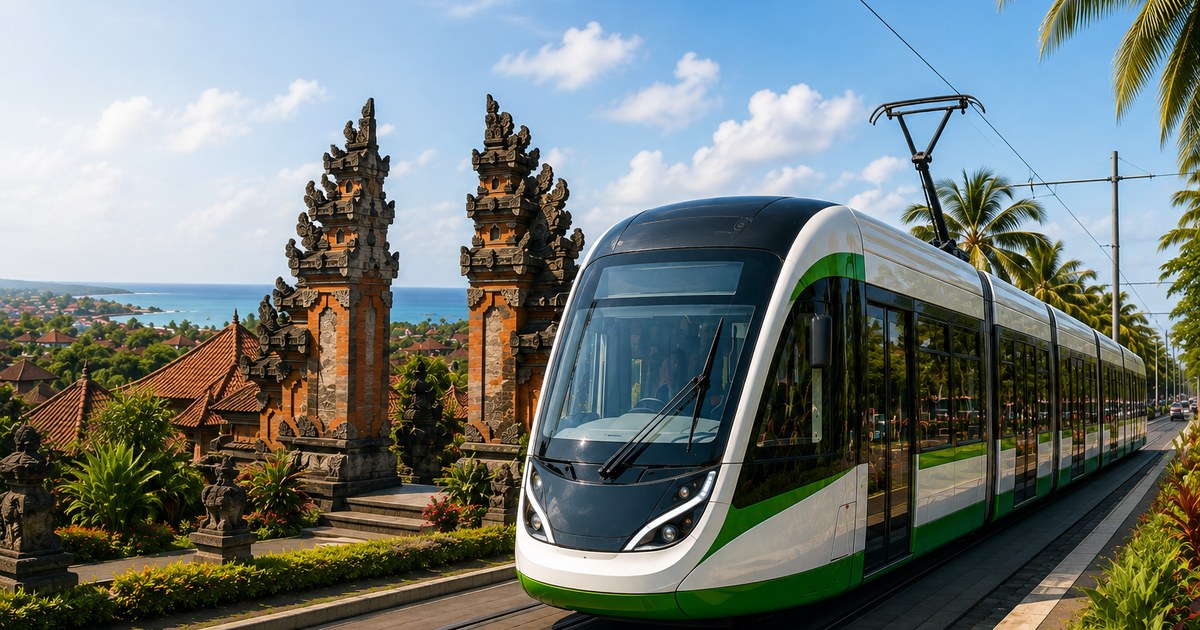
Bali is planning a Rp2.2 trillion (approximately US$123 million) electric tram system aimed at reducing congestion and improving public transport connectivity on the Indonesian resort island.
The proposed system is expected to be developed in phases, with the first phase intended to improve connectivity between I Gusti Ngurah Rai International Airport and the Canggu area, one of Bali’s major tourism destinations.
ART Proposed as Alternative to Earlier MRT Plan
Bali Governor I Wayan Koster has described the proposed system as Autonomous Rail Rapid Transit (ART).
The ART proposal represents a change from an earlier Mass Rapid Transit (MRT) concept for Bali. The previous MRT scheme, which broke ground in 2024, reportedly struggled to secure sufficient investor interest.
According to Koster, the ART alternative could be easier and less expensive to implement because it could integrate with the existing road network, whereas the previous MRT concept would have required extensive underground tunnelling.
The provincial government is reportedly targeting commencement of the project next year, subject to the necessary regulatory arrangements.
Rp2.2 Trillion Investment
The proposed electric tram system is estimated to require approximately Rp2.2 trillion in investment.
The current estimates indicate:
- Phase 1: approximately Rp1.2 trillion
- Phase 2: approximately Rp1 trillion
- Total: approximately Rp2.2 trillion (US$123 million)
State-owned railway operator PT Kereta Api Indonesia (KAI) is expected to play a role in the proposed financing and operation of the system.
However, Bali’s Transportation Agency has indicated that the project’s financing arrangements have not yet been finalised.
Addressing Bali’s Growing Transport Challenge
Congestion has become an increasingly important infrastructure issue for Bali, particularly around the island’s major tourism areas and the corridors serving Ngurah Rai International Airport.
A new public transport system connecting the airport with destinations such as Canggu could provide an alternative to road-based travel while supporting the island’s growing tourism and transport demand.
The ART proposal is still at an early stage, with financing, regulatory arrangements and detailed implementation requirements yet to be confirmed.
Related Railway News