
Overview
Purpose
EN 50126-1 provides a common framework for the management of Reliability, Availability, Maintainability and Safety (RAMS) within railway applications.Its purpose is to establish a structured lifecycle process through which RAMS requirements can be identified, specified, managed, demonstrated and reviewed as a railway system develops.
The process supports the integration of RAMS activities with systems engineering and project lifecycle activities and helps project stakeholders manage the relationships and potential conflicts between reliability, availability, maintainability and safety objectives.The standard is intended to be scalable and tailorable according to the nature, complexity and size of the railway system being considered.
Scope
EN 50126-1 applies the RAMS lifecycle approach across railway applications and provides the generic process for managing RAMS throughout the system lifecycle.
Its application includes railway fields such as:
• Command, control and signalling
• Rolling stock
• Fixed installations
• Railway infrastructure and associated systems
• Integrated railway systems and subsystems
The standard establishes the overall RAMS process rather than prescribing specific RAMS performance values for individual railway systems.Project-specific reliability, availability, maintainability and safety targets therefore need to be established from the applicable project, operational and system requirements.
Engineering Overview & Illustrations
Supporting engineering explanation, diagrams and visual references for understanding and applying this railway standard.
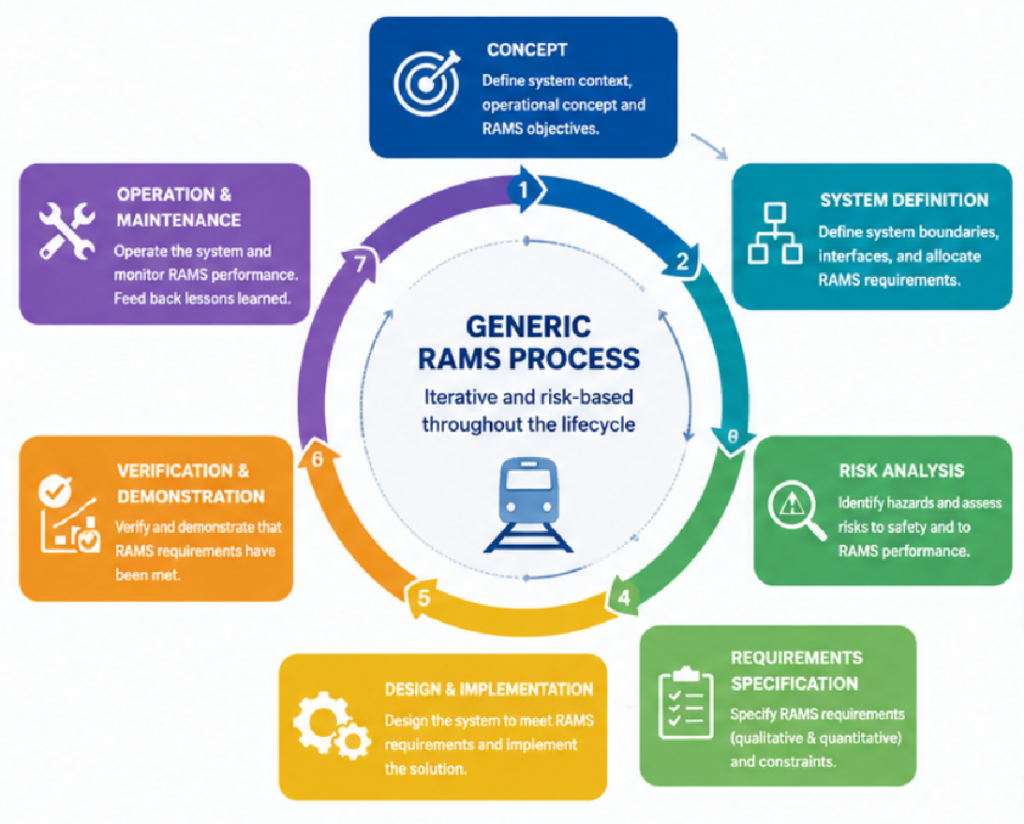
Railway RAM generic process
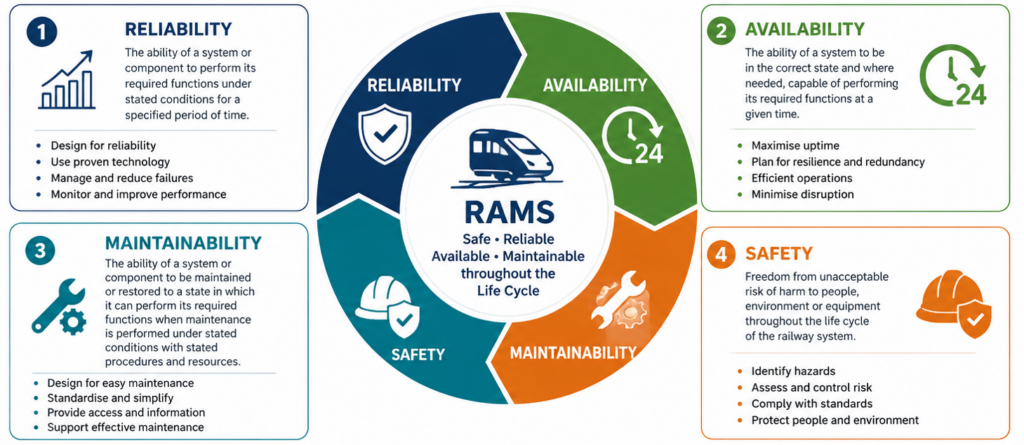
RAMS principles
Typical Railway Applications
EN 50126-1 may be applied throughout the development and operation of railway systems, including:
• Signalling and train control systems
• Rolling stock
• Traction power and electrification
• Trackside and fixed railway installations
• Telecommunications and operational control systems
• Stations and associated railway systems
• Depot and maintenance systems
• Railway infrastructure
• Integrated railway projects
Typical project applications include the preparation of RAM plans, RAMS requirements, reliability and availability analyses, maintainability assessments, hazard and safety activities, verification and validation planning, system acceptance and demonstration of compliance with RAMS requirements.
Key Topics
• Reliability
• Availability
• Maintainability
• Safety
• RAMS lifecycle
• System definition and operational context
• RAMS requirements
• Risk and safety management
• Hazard identification and analysis
• Reliability and maintainability analysis
• Verification and validation
• RAMS demonstration
• System acceptance
• Lifecycle management
• Roles and responsibilities
• Evidence and documentation
Who Uses This Standard?
EN 50126-1 is commonly relevant to organisations and professionals responsible for defining, designing, integrating, assuring, operating or maintaining railway systems.
Typical users include:
• RAMS Engineers
• System Assurance Engineers
• Systems Engineers
• Safety Engineers
• Reliability Engineers
• Maintainability Engineers
• Design Engineers
• System Integrators
• Railway Operators
• Infrastructure Managers
• Rolling Stock Manufacturers
• Signalling Suppliers
• Railway Systems Contractors
• Verification and Validation teams
• Independent Safety and Assurance Assessors
• Project and Engineering Managers
Obtain the Official Standard
RailBays provides an independent engineering overview for reference and educational purposes. For complete normative requirements, always refer to the official current edition issued by the relevant standards organisation or authorised distributor.
View Official Standard ↗