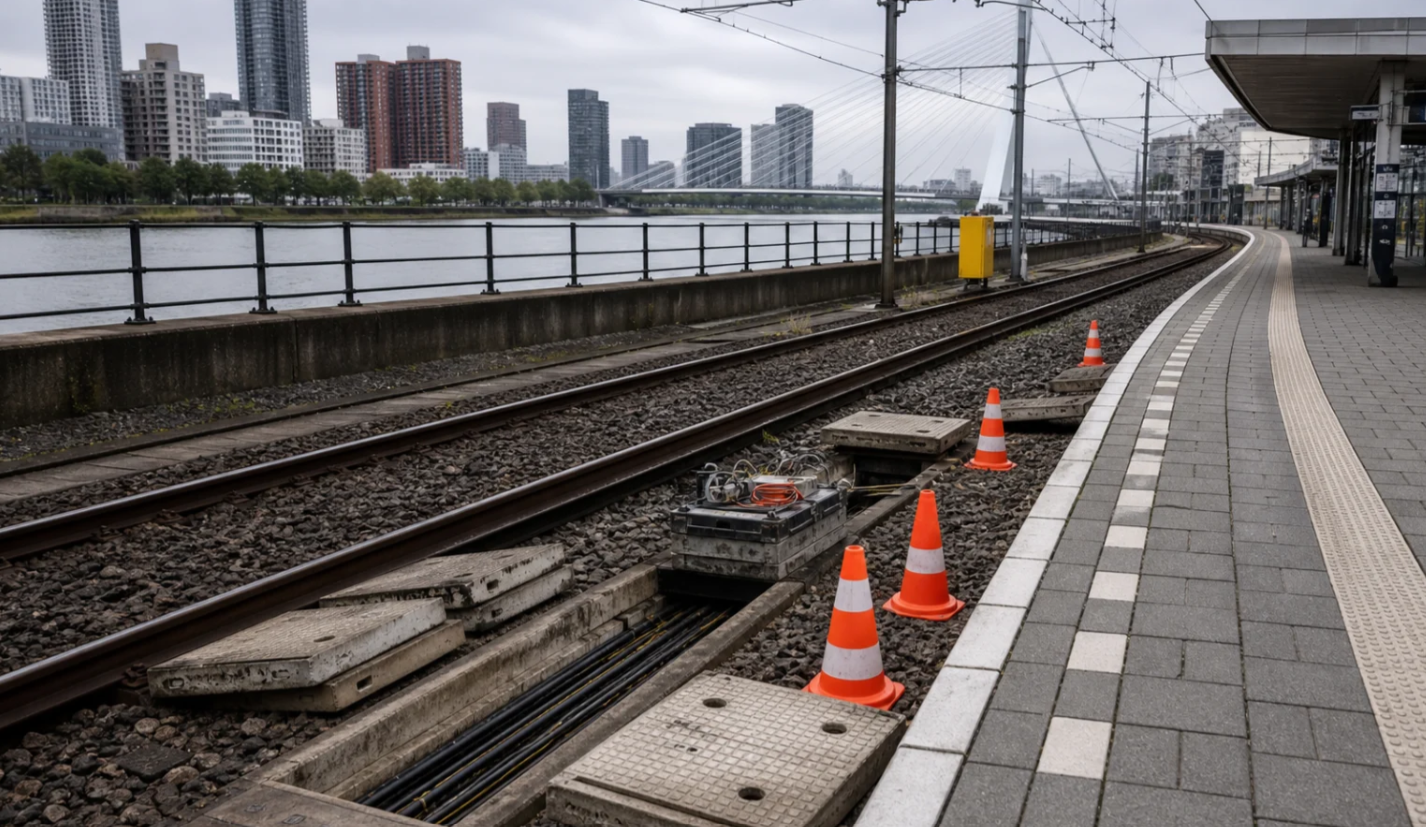
ROTTERDAM, Netherlands — After more than a week of severe travel chaos, rail services in and around Rotterdam are finally approaching a return to normal. A devastating fire in a cable duct near Rotterdam Stadion, which began on June 29, 2026, crippled the region’s rail network, leaving thousands of passengers stranded and international travel in disarray.
The Impact of the Outage
The fire destroyed approximately 200–300 cables essential for the signaling and switch systems that manage safe train passage. The resulting infrastructure failure brought all rail traffic south of Rotterdam to a complete standstill, affecting critical domestic routes to Dordrecht and Breda, as well as high-speed international links.
- International Travel: Eurostar services between London, Brussels, Paris, and the Netherlands were forced to bypass Rotterdam and Schiphol. For over a week, trains were terminated in Brussels or diverted via Utrecht, adding up to an hour of travel time and causing significant seat shortages.
- Domestic Chaos: Commuters faced widespread cancellations and long-term suspension of services between Rotterdam and southern hubs, with replacement bus services struggling to meet the surge in demand.
Why Repairs Were So Complex
Infrastructure manager ProRail faced immense technical challenges throughout the week. Because the heat from the blaze scorched identification labels off the hundreds of damaged cables, technicians were forced to perform manual “detective work,” identifying and re-matching each wire one by one before welding and testing them for safety. This painstaking process led to several missed reopening deadlines, extending the disruption well beyond initial estimates.
Current Status
Following extensive repairs, ProRail has targeted Tuesday, July 7, 2026, at 5:00 AM as the reopening time for the affected routes. While testing is currently underway to ensure all signaling systems are fully operational, passengers are still encouraged to check their specific journey details on the NS or Eurostar websites before traveling, as residual delays may occur as the network scales back to full capacity.
The incident has sparked a national conversation regarding the vulnerability of Dutch rail infrastructure, with experts pointing to the lack of redundancy in critical, centralized cable systems as a key factor in how a single localized fire was able to paralyze the nation’s transit arteries.
Are you traveling today? Travelers are advised to continue monitoring real-time updates from NS (Dutch Railways) and Eurostar as regular services resume.
Related Railway News